Symbolism and Meaning Behind Wing Designs
Angelic Wings and Spiritual Protection
Angelic wing designs carry a gravitas that few tattoo motifs match. They speak to celestial guardianship, a covenant that something watches over you. I have spoken with clients who describe the ink as a shield for the spirit.
The symbolism stretches beyond religious iconography. For many South Africans, these wings honour departed family. They render the soul’s ascent into permanence on skin.
- Archangel motifs suggest divine intervention
- Feathered wings alone imply spiritual shielding
- Haloed combinations blend purity with protection
Closed wings denote rest. Open wings signal readiness. Your wing tattoo ideas should mirror the specific guardianship you crave, whether that is comfort, courage, or a quiet covenant with the divine.
Fallen Wings and Rebellion
Fallen wings carry a different energy altogether. Where angelic designs suggest protection, these tattoos mark a rupture. The feathers may be torn, the structure asymmetrical, the shading heavy with charcoal blacks. For some clients in Johannesburg and Cape Town, this is a deliberate rejection of the divine narrative. They want wing tattoo ideas that speak to independence rather than devotion.
Rebellion is not always loud. Some choose a single broken wing on the shoulder blade, a quiet admission of past failure. Others opt for full spread but scorched edges, suggesting a fall that was survived. The meaning shifts with the wearer.
Consider what resonates with your own story:
- A fractured wing implies resilience after a personal collapse
- Charred feathers signal endurance through hardship
- An incomplete wing pattern suggests the wearer is still evolving
These designs are less about what watches over you and more about what you have walked through.
Butterfly Wings as Transformation
The chrysalis does not decorate. It dissolves. A caterpillar must break down completely before imaginal cells build something new. Clients asking for wing tattoo ideas rarely seek protection or rebellion. They seek proof that total change is possible.
Butterfly wings turn the focus inward. The veins, the gradients and the asymmetry all signal growth without witnesses. I placed a monarch shoulder piece on a lawyer in Rosebank after her divorce. I inked a closed-wing design on a paramedic in Durban who survived a hard year.
- A closed-wing butterfly on the wrist signals a private transition
- Half-painted wings suggest the process is still underway
- Mirrored butterflies along the spine split life into before and after
Placement matters. Butterfly wings suit exposed skin, the collarbone, the ankle, the nape of the neck. When we discuss wing tattoo ideas, we ask whether the transformation is complete or still unfolding. That answer shapes the design.
Bird Wings and Freedom
Most clients arrive with a photograph of a generic bird silhouette, but the real subject is usually altitude. A bird wing is an instrument of escape, measured in wingbeats per second and the angle of ascent against a hostile sky. The mechanics matter. Primary feathers split at the tips to reduce turbulence, and a good artist will study those splits. Research from the University of Groningen shows that birds like the swift adjust wing shape mid-flight to maximise lift, and that precision is what a quality wing tattoo must suggest. Static lines read as decoration. Feathers with visible separation and anatomical layering read as readiness.
The meaning shifts with the bird species. A seagull over a coastal Cape Town skyline carries a different weight than an eagle over the Drakensberg escarpment. One evokes scavenging and survival near the shore, the other evokes solitary surveillance from high rocks. Both imply movement away from a fixed point.
Placement for bird wings follows the body’s own flight paths. A piece running along the outer arm pushes forward when the arm extends. Wings spanning the shoulder blades activate when the wearer stretches or turns. The trick is to align the design’s tension with the body’s natural motion.
Bird wing tattoo ideas often focus on the moment of takeoff or the glide. A tapered trailing edge suggests acceleration. A broad, outstretched span suggests suspension in a thermal. The body knows the difference.
– Takeoff wings suit the forearm or calf, where movement is frequent.
– Gliding wings suit the back or chest, where the surface is broad and flat.
– Folded wings suit the ribs or collarbone, where they suggest rest between journeys.
The choice between these options depends on what the wearer wants to carry daily. A wing on the forearm is visible to everyone. A wing on the ribs is a private instrument, felt only when breathing deepens. Both are valid, but they serve different needs.
I once inked a peregrine falcon wing on a pilot’s bicep in Johannesburg. He said every time he reached for the controls, the feathers aligned with his own arm’s movement. That is the point of a bird wing design. It becomes a second skeleton, a reminder of what the body can do when it commits to leaving the ground.
Dragon Wings and Power
The dragon wing is the only wing design that does not pretend to work. It is too small for the body it carries. That is the point. Dragon flight is magical, not mechanical. The design must communicate force, not aerodynamics. A membrane stretched over bone suggests power.
For the wearer, dragon wings signal authority. They claim space without asking permission. A sharp leading edge and talons at the joint read as combat-ready. Smooth, leathery skin reads as older, wiser, and more patient.
Dragon wing tattoo ideas depend on the wing’s position:
- Open wide means aggression.
- Folded tight means patience.
- Wrapping around the body means guarding something.
The skin texture and bone angle matter more than the outline. A good artist shades the membrane so it looks stretched, not sagging. That tension separates a dragon wing from a bat wing. In South Africa, a dragon wing represents the one creature that answered to no one.
Popular Wing Styles and Aesthetics
Realistic Feather Textures
Feathers hold a quiet paradox. They are fragile yet formidable, and in tattoo art, they demand detail that transforms skin into canvas. When exploring wing tattoo ideas, the texture of each plume becomes the defining feature. A single feather contains a central shaft, or rachis, with thousands of barbs branching outward. A skilled artist recreates this anatomy with fine linework and layered shading.
Realism thrives on contrast. Deep shadows between overlapping feathers create depth, while white highlights suggest the sheen of natural oil. Consider the source material:
- Owl feathers offer soft, serrated edges for a muted look.
- Peacock feathers introduce iridescent blues and greens, reading more ornamental.
- Hawk feathers carry bold stripes for dramatic compositions.
The choice of species alters the aesthetic. For wing tattoo ideas, the texture should feel tactile, inviting the eye to trace each barb and shaft.
Geometric and Minimalist Wings
Clean lines can hold more meaning than a fully shaded wing. When exploring wing tattoo ideas, geometric and minimalist styles focus on structure over texture. The result is architectural and precise.
Artists working in this style use the golden ratio, repeated angles, and negative space. A single continuous line traces the span of a wing. Dotwork adds depth through stippled shadow. A geometric half wing placed along the collarbone contrasts sharp edges with the body’s natural curve.
- Sacred geometry patterns that suggest feathers through triangles
- Single line outlines drawn freehand
- Blackwork wings with segmented panels
Minimalism demands restraint from artist and wearer. The wing is implied, not described. For a client who wants flight represented with clarity, this approach works.
Watercolor and Soft Blends
Some tattoo artists refuse to do watercolour work entirely. The style borrows from fine art painting, using soft blends of pigment that mimic brushstrokes on wet paper. The result is soft, luminous, and entirely unique.
For wing tattoo ideas, watercolour styles work best on the shoulder blade or forearm, where the skin offers a broad canvas. The colours bleed outward, suggesting movement without hard outlines. Artists often pair this with a thin black line to anchor the design.
Popular approaches include:
- Loose washes of blue and gold for a sunrise effect
- Splatter accents that suggest feathers catching wind
- Faded edges that dissolve into the skin
The technique requires an artist who understands skin as a medium, not just a surface. Watercolour tattoos fade faster than blackwork, so placement and aftercare matter. The softness is the point. Anyone exploring wing tattoo ideas will find this approach delivers elegance without rigidity.
Tribal and Blackwork Wings
Tribal wings lean on bold black shapes and symmetry. Many artists draw from Polynesian or Maori motifs, using sharp angles and spirals. The result is a design that reads clearly from across the room. Blackwork takes this further, packing dense ink into the entire wing, often leaving negative space to suggest feather edges. These styles suit the upper back or chest, where the skin can carry the visual weight. For wing tattoo ideas, tribal and blackwork offer permanence. They age well, hold their contrast, and rarely need touch-ups.
Popular choices include:
- Angular feather tips that taper into the skin
- Curved lines that follow the shoulder muscle
- Solid silhouettes with cutout patterns
The appeal is the contrast. Dark ink against light skin creates a stark, commanding presence. No shading, no colour, only shape. That discipline turns the wing into a statement.
Sketch-Style Wing Drawings
Sketch-style wing drawings turn the form into a study of motion and raw line work. The appeal lives in the unfinished edge, the visible pencil stroke, the cross-hatching that mimics shading without full colour. It suits people who treat their skin as a working notebook. These wing tattoo ideas feel immediate, like the artist drew directly on the body with graphite before committing to ink. The result is a graphic, textural piece that breaks away from polished realism.
Many sketch wings focus on the shoulder blade or the forearm, where the natural curves of the muscle interact with the freehand line progressions. The design often looks like a page ripped from a study book. Artists will layer strokes to create depth, with darker sections pulling the eye inward and lighter, broken lines suggesting feather fluff or wind passing through. This style pairs well with small handwritten dates or coordinates, making the piece distinctly personal.
Popular choices include:
– Loose, continuous outlines that circle the wing edge
– Heavy cross-hatching concentrated at the base
– A single wing with visible drafting marks and correction lines
– Erased or smudged areas suggested through softer, spaced strokes
The strength is in the process. You see the artist’s hand, not just the final image. It is an honest, gritty approach that stands apart from smoother tattoo work.
3D Illusion Wings
Rarely does ink appear to physically lift from the dermis, yet that is the precise goal of 3D Illusion Wings. This style relies on hyper-realistic shading and precise anatomical perspective to trick the eye, making feathers seem to hover just above the skin. The result is a dimensional optical illusion that creates a tangible sense of depth. For wing tattoo ideas, it transforms the body into a canvas for sculptural expression.
Artists use dramatic chiaroscuro to cast controlled shadows beneath each feather, which creates the convincing separation from the skin. Placement is critical, as the design must follow the body’s topography to maintain the illusion. The shoulder, upper back, and collarbone are ideal for leveraging natural muscle contours.
– Full wing spans with dramatic, cascading shadows
– A single wing emerging from behind the shoulder joint
– Feathers intersecting with the collarbone for a layered effect
– Wing tips appearing to fold around the arm’s curvature
The verisimilitude achieved here demands a high skill level and a willingness to commit to larger-scale work. If the body is the canvas, this style makes it rise from the flat plane.
Placement and Composition Strategies
Back Piece Designs for Full Wings
The back offers an expansive canvas, yet its geography is rarely considered outside of the spine and shoulder blades. A full wing spread demands a dialogue with the body’s natural topography. If the wings originate at the scapulae, or shoulder blades, they map perfectly to the muscle movement beneath, creating a design that appears to flex and shift with every motion. Anchoring the top of the wings at the trapezius muscles allows for a broad, imposing silhouete, while tapering the feathers down toward the lumbar spine can elongate the torso visually, a tactic many wearers use to balance broader hips or rounded shoulders.
Choosing a fixed point of origin is your first architectural decision. A high placement, with tips draping over the deltoids, implies a state of readiness or flight. A lower origin near the middle of the back invites a sense of folded stillness, emphasizing weight and gravity over ascension. To maximize the impact of these full back pieces, you must consider how the design interacts with your specific anatomy.
– The wing span should align with the acromion process to avoid distortion on the shoulder joint.
– Feather tips can be tapered abruptly to follow the natural curve of the latissimus dorsi.
– The central gap between the wings needs to accommodate the natural curvature of the spine, often requiring a subtle gap or a symbolic element to bridge the void.
Rather than forcing the image to conform to a rigid rectangle, allow the composition to follow the body’s own lines. The spine acts as a reference point for symmetry. A perfectly mirrored set of wings creates an angelic, static feel. Slight asymmetry, where one wing dips lower or rotates outward, introduces tension and motion, suggesting the subject is caught mid-thought or in the process of turning. When designing full back pieces, the negative space between the wings becomes as critical as the feathers themselves. That central column, the bare skin, creates a focal point for the eyes, often drawing attention to the delicate vertebrae. Flowing wing tattoo ideas often use this space to house script, a cross, or a portrait, tying the physical body to the symbolic meaning of the design. This strategic void prevents the piece from feeling like a heavy, dark blanket and adds a level of sophistication rarely seen in lesser compositions.
Shoulder and Collarbone Placement
The collarbone presents a different conversation entirely. This is not a canvas for grand, sweeping narratives. It is a platform for precision, where the stark geometry of the skeleton does half the work for you. When you place wings here, the bone structure itself becomes the anchor, and the design must respect the hard, unyielding lines of the clavicle rather than fight them. I have seen many pieces falter because the artist ignored the fact that this area is all movement and little surface area for heavy shading.
A shoulder and collarbone placement is less about the wingspan and more about the point of origin, which naturally becomes the acromion process. The skin here is thin, stretched taut over the bone, making it a painful but incredibly rewarding spot for fine line work. The design should follow the deltoid as it curves into the shoulder, allowing the feathers to wrap slightly over the muscle mass. A common error is to draw the wings flat, which looks like a sticker. The superior approach is to let the wing tips caress the upper arm, creating a seamless flow that is visible from both the front and the side.
Consider these structural points for this area:
– The central sternum offers a natural break; the wings rarely need to connect fully in the middle.
– A high, delicate placement near the neck can elongate the appearance of the collarbone.
– Smaller, more intricate bird wings or sparrows work better here than heavy, detailed wings meant for a larger space.
The true secret to this placement lies in the negative space. Because the collarbone shadow is already a striking visual line, the tattoo should accentuate that hollow. Instead of filling the entire bone, let the wings emerge from the soft tissue beneath it, leaving the centre of the chest bare. This creates a sense of emergence, as if the feathers are growing out from the body’s own frame. For those seeking wing tattoo ideas that are intimate rather than imposing, this location offers a focused, deliberate aesthetic that can be easily concealed or showcased depending on your neckline.
Ankle and Wrist Micro Wings
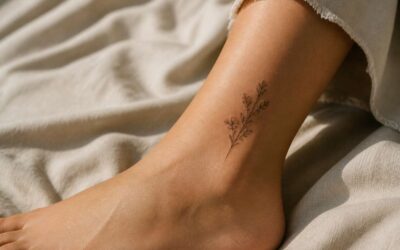
The smallest wing tattoo takes less time than a haircut and hurts more than you expect. Micro wings demand a steady hand and a realistic ego. The skin is thin and every mistake stays visible for life.
The wrist offers the pulse point as a backdrop. A tiny wing moves with every gesture and handshake. The malleolus bone provides a hinge, and the wing wraps around the inner or outer edge, shifting with each step.
What works at this scale:
- Single wings on the inner wrist, following the tendon line.
- Outer ankle wings curving around the bone, avoiding the Achilles.
- Fine line blackwork, which holds better than delicate colour.
These wing tattoo ideas for the ankle and wrist are for people who want subtlety. If you are exploring wing tattoo ideas, small does not mean simple. The needle will hurt, and the result is worth every second.
Sternum and Rib Cage Flow
It is a rare canvas that demands such intimate negotiation between the wearer and the artist. The sternum and rib cage offer a plane of skin stretched taut over bone, a territory where the needle’s vibration resonates deeper than on fleshier parts of the body. This placement is not for the faint of heart; the process is a test of endurance, but the result is a piece of art that feels like a secret held close to the chest. The asymmetry of the human torso means a perfectly mirrored wing will often look askew, so a skilled artist will sketch directly onto the skin, following the body’s natural lines.
The flow of the composition must respect the architecture of the ribcage. Each curve of the wing can trace the intercostal spaces, the feathers dipping and rising with the breath. A design that spans from the sternum out towards the side can visually elongate the torso, while a piece that follows the lower rib edge creates a framing effect that is both sculptural and personal.
– Map the central quill to the sternum’s vertical line for a grounding effect.
– Curve the primary feathers along the lower rib edge to accentuate the waist.
– Use negative space to allow the skin’s natural contour to define the wing’s shape.
The healing process on this area is a particular consideration. Movement from breathing and the constant friction of clothing can test the integrity of the lines. Yet, it is this very dynamism that gives the tattoo its life, shifting with every inhalation and stretching with every twist of the torso. These wing tattoo ideas are for the individual who views their body not as a flat page, but as a living, breathing sculpture. The wing becomes a part of the body’s kinetic movement, a permanent shadow that moves with the architecture of bone and sinew.
Integrating Wings with Other Elements
A wing does not need to stand alone. The strongest wing tattoo ideas emerge when feathers interact with a pocket watch, a portrait, or a geometric anchor. The curvature can cradle an object, while primary feathers sweep toward a name without obscuring the lettering. On the forearm, a wing might wrap a compass, its tips pointing to fixed directions. For larger stories, the wing can unify separate elements into one moving composition.
When integrating wings:
- Align the wing’s angle with the flow of the other element.
- Use negative space between feathers to house small details.
- Let the other element sit at the wing’s root or tip.
Skin contours guide the result. A wing from shoulder to elbow frames a sleeve; a wing behind the ear may accompany a tiny starburst. Treat the wing as a partner, not a decoration. Explore wing tattoo ideas that ask what the wing protects, carries, or points toward!
Customization and Personalization Ideas
Adding Names, Dates, or Memorial Elements
Many people choose wing tattoo ideas to symbolize freedom. Yet the most personal designs are the most significant. Adding a name or a date turns the wing into a monument. The skin preserves the exact moment a life changed.
Placement matters. A date hidden under the scapula stays private. A name along the edge of the wing invites conversation. You can select a font that matches the person’s handwriting. Some people ask for the number of feathers to equal the years lived.
- Place a birth date in the left wing and a death date in the right.
- Embed a fingerprint inside a feather.
- Use the thread from a funeral wreath as a line in the design.
Memorial elements require precision. The artist must hold each stroke with care. For those seeking wing tattoo ideas, the result is not decorative. It is documentary.
Combining Wings with Hobbies or Passions
The most vivid wings begin with a person’s daily life. A birdwatcher might ask for wing tattoo ideas that hide the silhouette of a specific finch in each feather. A gardener could integrate dried seed pods along the lower edge. The result feels earned, not borrowed.
For those with hands-on hobbies, the options multiply:
- Carpenters can use wood grain textures that transition into downy tips.
- Astronomers might plot a constellation across the wing’s span.
- Cyclists can mirror chain links along the lower wing edge.
These designs demand research. The artist studies the hobby’s details, from tool shapes to colour palettes. In Cape Town, artists often source local botanicals for reference. The wing becomes a record of how a person spends their hours.
Asymmetrical and Abstract Wing Concepts
Some clients arrive with a family fingerprint pattern and ask for it to become the very texture of each feather. Others request a wing that mimics the cracked earth of a specific farm they grew up on. This level of customisation turns the design into a personal archive rather than a decoration. The artist must work with reference photos and sometimes soil samples to get the colour right. It is a demanding process.
Asymmetrical designs offer a different kind of appeal. One wing may be fully feathered while the other is reduced to a clean outline. This approach rejects the traditional mirror image. It can represent a past self and a present self, or simply visual balance through imbalance.
Consider these structural possibilities:
– A single wing sprouting from the shoulder blade, with the other rendered as a shadow
– One wing depicted in sharp blackwork, the other in soft watercolour washes
– A wing that morphs into a swirl of smoke along its lower edge
These wing tattoo ideas challenge the viewer to stop expecting perfection. They invite a closer look.
Matching Wings for Couples or Friends
Few acts of trust compare to cleaving a single set of wings across two bodies. The left half settles on one shoulder blade, the right half on another. Only when you stand together does the full span reveal itself. This arrangement demands precise alignment, so the artist should cut one stencil and apply both sides together.
Some couples choose shared migratory paths, one of the more intimate wing tattoo ideas, inscribing each partner’s home coordinates into the other’s feathers. Friends may split a raven’s wing into opposing directions, one half in heavy blackwork, the other in pale grey washes. The result is a permanent dialogue between two skins.
Consider these pairings:
- A feather that begins as solid blackwork on one person and dissolves into fine lines on the other
- Two wings that lock at the wrists when arms rest side by side
These wing tattoo ideas thrive when the design carries private meaning beyond the visible image.
Hiding Symbols Within the Feathers
Some tattoos look complete from across the room, but their true depth only appears on closer inspection. The most memorable wing tattoo ideas embed private codes within the feather structure itself. A constellation map drawn into the negative space between barbs, or a date written in microscopic script along the shaft, turns an aesthetic choice into a personal archive.
For a more integrated approach, the feather’s natural contours can mask almost anything. Consider hiding elements within the vane pattern:
– Birth coordinates stitched as tiny dots between the quill lines
– A heartbeat rhythm etched along the curve of the primary feather
– A signature, a fingerprint, or a single meaningful word in the underlayer
Many artists will darken the feather’s base to create a natural shadow, then nestle the symbol inside that darker zone. Others use the fine white lines between blackwork feathers to conceal names or initials without breaking the visual flow. The design remains a wing at first glance, and a personal statement at the second. This approach suits anyone who prefers their stories encoded rather than announced. South African clients, for instance, often ask for protea petals or acacia thorns folded into the feather tips, grounding the wing in local geography. The result is a quiet conversation between the wearer and the observer who looks long enough.
Storytelling Through Wing Styles
Wing styles carry their own narratives. A folded wing suggests rest after struggle, while an outstretched wing speaks of imminent departure. When I work with clients, I ask what moment they want to freeze. That answer shapes the angle, the feather density, and the shadow placement.
Consider these storytelling approaches:
- A single primary feather with torn edges for resilience
- A wing mid-beat, caught between landing and flight
- A wing facing downward, grounded yet open
Personal symbols find their way into the silhouette. A Karoo farmer might request a wing shaped by the curve of a kestrel’s flight. A teacher might choose a wing that mirrors the open pages of a book. These wing tattoo ideas work because the style itself becomes the story, rather than the ink alone.
Color, Shading, and Detail Considerations
Monochrome vs. Full Color Palette
A wing’s colour story is as personal as the skin it graces. Monochrome wings rely on contrast, where fine linework and layered shading create depth that feels sculptural. Full colour palettes, by contrast, capture the warmth of a sunset or the cool glimmer of a kingfisher, tones that resonate beautifully under South African sunlight.
Think about how the piece will age. Ink shifts with the seasons of your life.
– Bold outlines anchor vibrant hues for longevity.
– Soft gradients flatter pale or freckled skin.
– High-contrast blackwork suits busy, active lifestyles.
For enduring wing tattoo ideas, the shading must complement your natural undertones. A skilled artist will balance pigment density with feather flow, ensuring the detail remains crisp for decades. Choose a palette that feels like your skin’s native language.
High-Contrast Shading for Depth
One feather can carry over fifty tonal variations, yet most wing tattoo ideas flatten that spectrum into a single grey wash. High-contrast shading for depth changes everything. It carves the rachis, lifts the barbs, and gives the wing a pulse under South African light.
Color, when used, must respect the shadows. A deep indigo or burnt sienna anchors the eye, but detail lives in the transitions. Fine stippling creates texture; bold sweeps of ink define the curve of an alula. Warm undertones in local skin demand cooler greys to avoid muddiness.
- Density of ink sets how far the shadow falls.
- Direction of feather lines guides the eye along the wing’s arc.
- Background breathing space preserves contrast.
Negative Space and Linework
The most compelling wing tattoo ideas often live in what you choose to leave out.
Negative space is not an absence of design. It is the architecture that gives a wing its lift. Unmarked skin becomes the sky itself, a dark crate of ink pressing against the edges of a feather line. When the artist carves a wing from shadow, the contrast holds tension. The eye rests in the empty pockets. The mind fills them with movement.
Linework carries the same burden. A single, aggressive stroke can dictate the entire posture of the wing, while a soft, broken outline suggests fragility. There is a raw honesty in a line that is allowed to breathe, an intimacy in the border where skin meets intention. Consider a wing that dissolves into dots, where the feather barbs fade into a scattered pattern of points. The visual silence becomes part of the tattoo.
When planning the placement of open skin within a wing composition, consider these deliberate choices:
- Vary the line weight to push some feathers forward and let others recede.
- Allow the wing to break apart at the edges, losing density as it reaches the bone.
- Leave a core section completely untouched, drawing focus to the negative space itself.
The psychological effect is profound. A dense wing is a statement; a wing that fades into the skin is an invitation. It asks the viewer to participate, to trace the missing lines and complete the story. For those exploring wing tattoo ideas, the blank space is the territory where identity does not need to shout. It can simply exist with confidence.
Glow Effects and Highlights
Light is the final act of a wing tattoo. A highlight is not a decoration; it is the surface tension of a feather catching the sun. When ink holds a luminous point, the wing gains a subtle sheen, a suggestion of oil and keratin that shifts with the wearer’s movement.
Consider how the skin’s own undertone plays with the pigment. A warm South African complexion may transform a cool white highlight into a gentle amber glow. The artist must plan these luminous points, letting them sit where the wing’s curve would naturally catch light, often along the leading edge or across the shoulder of the feather. This deliberate placement creates an illusion of volume that flat shading cannot achieve.
Shading carries the weight of the wing’s three-dimensional form. Deep, saturated tones pull the feather down into shadow, while a translucent wash of color lifts the barb tips. The most successful designs use a narrow band of contrast. A tight cluster of dark ink against a pale highlight produces a crisp, almost metallic appearance. This technique is especially effective for wings that feel alive, as if they are mid-beat.
- Use a single, bright specular point on each primary feather to suggest a glossy surface.
- Let the highlight bleed slightly into the shadow zone to soften the transition, mimicking natural diffused light.
- Reserve pure white ink for the highest point of the wing, usually the scapulars or the leading edge, to avoid a flat look.
Glow effects operate on a different plane entirely. They do not describe the wing’s own surface, but the light emanating from behind or around it. A subtle halo, rendered in a lighter tone of the same hue, can separate the wing from the skin’s background. This works best on a shoulder or back piece, where the curvature of the body allows the glow to wrap around the bone. The result is a sense of internal radiance, as if the wing possesses its own quiet energy. The placement of these highlights must always be intentional, mapping the light to the body’s contours rather than applying it as an afterthought. For anyone exploring wing tattoo ideas, the interplay between shadow and gleam is where the design becomes tactile, a surface you can almost feel.
Scale and Detail Density
Color selection for wing tattoo ideas must begin with the skin’s undertone. A cool base supports blue and violet feather work, while a warm base carries amber and russet tones. The artist layers pigment in thin glazes, allowing the skin to glow through the lower depths.
Shading determines how much detail survives at a distance. Tight, dense work suits a smaller canvas, but it requires high contrast to stay readable. Scale changes this equation. A full back piece can hold fine barb lines and soft gradients, while an ankle piece needs bolder shapes.
- Consider the viewing distance when choosing detail density.
- Let the natural contour of the muscle guide the shading direction.
- Balance dark and light zones to prevent muddiness.
Detail density should match the body’s movement. Larger wings allow layered textures, yet smaller wing tattoo ideas benefit from simplified forms that keep the ink legible for years.
Choosing a Tattoo Artist for Wing Art
Reviewing Portfolios for Feather Work
The difference between a striking wing and a muddy mess lies in the artist’s command of feather work, which is why exploring wing tattoo ideas should begin with portfolio review. When reviewing portfolios, search for evidence of soft transitions and sharp edges in the same design. Feathers require both discipline and spontaneity, so examine how the artist balances those qualities.
- Look for healed photographs, not just fresh ink.
- Check how the artist draws feathers of varying sizes.
- Observe the flow of the wing as it follows the body’s curve.
Most wing tattoo ideas depend on the artist’s ability to layer tones. A portfolio filled with muddy shading signals trouble. Ask questions about their experience with avian subjects. The skin settles over time, and delicate gradients can blur if applied too heavily. An artist who understands the anatomy of a wing will know where to press and where to ease off.
Consultation Tips for Custom Wings
The consultation is where wing tattoo ideas take their true shape. This conversation matters more than any reference image you bring. A skilled artist will assess your body’s natural contours and explain how the wing’s structure will adapt to your movement. They should ask about your lifestyle, your pain tolerance, and your long-term plans for the area.
When discussing custom wings, bring photographs of birds that resonate with you, but remain open to artistic interpretation. The artist may suggest angles or feather patterns you have not considered. Your job is to communicate the feeling you want the wing to evoke, not to dictate every line.
- Ask to see sketches drawn during past consultations, not just finished pieces
- Request a detailed timeline for the session and healing process
- Discuss how the wing will age with your skin over the next decade
Trust your instincts during this meeting. A consultation that feels rushed or dismissive signals trouble ahead. The right artist will take measurements, discuss placement options, and consider how the wing interacts with your bone structure. This collaboration between your vision and their expertise produces wing tattoo ideas that work with your body rather than against it. The best conversations leave you feeling heard and confident in the direction. For South African clients, ask about local healing conditions and how the Highveld sun or coastal humidity might affect your fresh ink.
Understanding Aftercare for Fine Details
Selecting the right artist for wing tattoo ideas demands more than admiring their Instagram grid. You need someone who has mastered fine line work and feather textures. Ask to see healed photographs in addition to fresh pieces. A wing’s fine details can blur within months if the artist lacks precision.
Aftercare determines whether those details survive. For South African clients, the Highveld sun damages fresh ink. Keep the area covered for the first two weeks. Coastal humidity introduces different risks, mainly bacterial buildup.
- Wash the tattoo twice daily with mild, unscented soap
- Apply a thin layer of healing ointment, never heavy creams
- Keep the wing out of direct sunlight until fully healed
- Skip swimming pools and ocean dips for three weeks
Your artist should provide written aftercare instructions tailored to your province. I have seen too many wings fade because clients skipped this step. If they do not, consider that a warning sign!
Cost and Session Planning
A wing tattoo’s price often tells you more about the artist’s confidence than their hourly rate. South African studios vary wildly in pricing, from emerging artists charging R500 an hour to established specialists commanding R2,500 or more. The difference lies in speed and precision. A master of wing tattoo ideas will complete a realistic feathered shoulder piece in half the sessions a generalist needs, making their higher rate the more economical choice over time.
Choosing a tattoo artist for wing art requires evaluating their technical approach to negative space and feather overlap. Ask how they handle the natural curve of your shoulder blade or collarbone. A skilled artist will adjust the wing’s geometry to your anatomy rather than applying a flat stencil. This consultation should feel collaborative, not adversarial. Bring reference images that show the aesthetic you want, but remain open to their structural recommendations.
Session planning for a large wing piece demands realistic expectations. The upper back and ribs are high pain zones, so schedule your sessions with recovery time in mind. Most detailed wing tattoo ideas require multiple sittings spread across weeks or months. Each session builds on the previous layer, allowing the ink to settle before adding deeper shadows and highlights. This phased approach prevents overworking the skin.
Consider the practical logistics before committing to your design:
– Book sessions in the morning when your pain tolerance is higher
– Plan for four to six week gaps between appointments for proper healing
– Budget for a touch-up session six months after completion
The final cost depends on your design’s density and the artist’s reputation. A minimalist outline might cost a few thousand rand, while a full back piece with intricate feather textures and 3D elements can exceed R20,000. Regardless of your budget, never compromise on the consultation process. The time spent planning your sessions and reviewing the artist’s approach to wing tattoo ideas will determine whether your ink remains sharp for decades. Patience in planning prevents regret in permanence.
Cover-Up and Revision Considerations
Finding the right artist for wing tattoo ideas requires trust. You are asking someone to render feathers that wrap around bone, muscle, and sinew. A cover-up adds complexity. The old ink must be assessed for saturation, placement, and scar tissue before a new design takes shape.
I always ask about their experience with laser fading. Many South African studios pair partial removal with a fresh concept, especially for dark work. The artist should be honest about what is possible. If they promise perfection over heavy black ink, walk away!
- Request healed photos of cover-ups
- Ask about scarred or raised skin
- Confirm multiple sessions
Revision work requires patience. The new wing must respect existing lines while introducing enough visual weight. A skilled artist uses shadow and feather overlap to blend old ink. Bring your reference images and stay open to their structural suggestions for wing tattoo ideas that fit your anatomy.


0 Comments